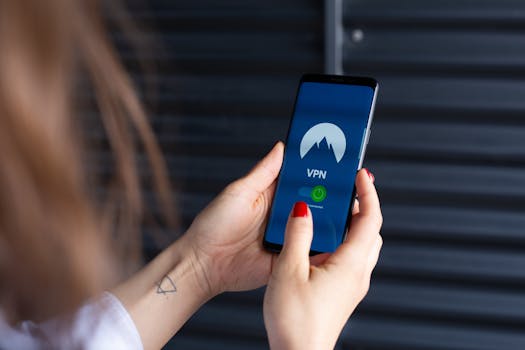
The Social Media Privacy Dilemma: How VPNs Influence Your Online Safety
In a digital landscape where every click, like, and share can be tracked, social media users are increasingly concerned about their privacy. With more than 4.8 billion people actively using social networks as of 2023, the question of how to protect personal information is more relevant than ever. Virtual Private Networks (VPNs) have emerged as a popular tool for enhancing privacy online, but what exactly is their impact when it comes to social media? Do they truly shield your identity, or are there limitations to what a VPN can do in the world of Facebook, Instagram, Twitter, and TikTok? This article explores the nuanced relationship between VPNs and online privacy on social media, providing specific insights, comparisons, and practical guidance for everyday users.
Understanding How VPNs Work with Social Media Platforms
To appreciate how VPNs affect your privacy on social media, it’s essential to first understand what a VPN actually does. A VPN creates an encrypted tunnel between your device and a remote server operated by the VPN provider. This process masks your real IP address, making your online actions appear as if they’re coming from the VPN server’s location instead.
When you access social media through a VPN, your connection is secured and your real IP is hidden from the platforms you visit, as well as from your internet service provider (ISP). This can prevent third parties from easily tracking your physical location or tying your activity to your real-world identity.
However, social media companies have their own data collection mechanisms that go far beyond your IP address. They use cookies, device fingerprints, and account logins to gather information about your habits, preferences, and even your network of friends. A VPN can shield your traffic from outsiders, but it does not inherently disguise your activities from the platforms themselves once you’ve logged in.
For example, if you log into Facebook through a VPN, Facebook may not know your real location, but it still knows your account details, posts, likes, and interactions. Thus, a VPN is a valuable privacy tool, but not a magic cloak for total anonymity on social networks.
Key Privacy Benefits of Using a VPN on Social Media
Despite these limitations, VPNs offer several important advantages for protecting your privacy on social media:
1. $1 By hiding your true IP address, VPNs make it more difficult for social networks and third-party trackers to pinpoint your location or link your browsing habits to your identity. According to a 2022 study by DataProt, over 37% of tracking attempts on social media rely on IP addresses. 2. $1 Social media platforms are frequently accessed on public Wi-Fi networks, which are notoriously insecure. A VPN encrypts your data, reducing the risk of snooping or man-in-the-middle attacks, especially when logging into accounts from cafes, airports, or hotels. 3. $1 Some countries restrict access to specific social media platforms. VPNs allow users to connect via servers in other countries, circumventing censorship and accessing the full range of social media services. 4. $1 VPNs can disrupt the accuracy of location-based advertising by making your activity appear to originate from a different region. While this doesn’t eliminate tracking entirely, it can reduce the effectiveness of targeted ads based on your real location.Consider this comparison of the privacy benefits when using social media with and without a VPN:
| Privacy Aspect | Without VPN | With VPN |
|---|---|---|
| IP Address Visibility | Exposed to platforms & ISPs | Masked from platforms & ISPs |
| Location Tracking | Accurate | Obscured or inaccurate |
| Protection on Public Wi-Fi | Vulnerable | Encrypted & secure |
| Bypassing Geo-blocks | Limited | Possible |
| Ad Personalization | Highly targeted | Less targeted by location |
Limitations: What a VPN Can’t Hide on Social Media
While VPNs are powerful, they are not a cure-all for privacy concerns, especially when it comes to social media. Here are some critical limitations to keep in mind:
- $1 Once you are logged into your social media account, your activity is primarily tied to your profile, not your IP. Platforms can track your behavior, preferences, and interactions regardless of whether you’re using a VPN. - $1 Social media networks use cookies, browser fingerprinting, and other advanced tracking techniques to identify users. These methods can persist even if your IP address changes, making complete anonymity difficult. - $1 Social media companies often share user data with advertisers, affiliates, and analytics firms. A VPN does not prevent this internal sharing or the use of your data once it’s in the hands of the platform. - $1 Some platforms, like Instagram or Facebook, may flag or temporarily lock accounts that log in from unusual locations or IP addresses, suspecting unauthorized access.According to a 2023 Pew Research Center report, 81% of Americans feel they have little control over the data collected by social media companies, underscoring the importance of understanding the limits of privacy tools like VPNs.
Practical Tips: Maximizing Privacy on Social Media with a VPN
Using a VPN is a strong start, but if you want to truly maximize your privacy on social media, consider combining it with other best practices:
1. $1 Don’t stay logged into your social media accounts on your devices. Logging out prevents passive data collection when you’re not actively using the platform. 2. $1 Regularly delete cookies and browsing history to minimize tracking. Some browsers offer privacy modes or extensions that help automate this process. 3. $1 Consider browsers like Firefox or Brave, which offer enhanced privacy protections and stronger controls over third-party trackers. 4. $1 Be mindful of what you post. Avoid sharing sensitive personal details, your exact location, or travel plans. 5. $1 Platforms like Facebook and Twitter provide privacy controls. Regularly audit your settings to minimize public exposure and restrict who can see your posts and profile information. 6. $1 Enable two-factor authentication to protect your accounts, especially when using a VPN, as logging in from different locations may trigger security checks.A 2022 global survey by Statista revealed that 31% of VPN users cited “privacy on public Wi-Fi” as their main reason for using a VPN, while 23% sought to avoid tracking and profiling. Clearly, VPNs are part of a broader privacy toolkit — not a standalone solution.
Case Study: Real-World Scenarios of VPN Use on Social Platforms
To illustrate the impact of VPNs on social media privacy, let’s consider two typical use cases:
$1 Maria, a student from Brazil, travels to China, where popular platforms like WhatsApp, Facebook, and Instagram are banned. By connecting to a VPN server in the United States, she bypasses government censorship and accesses her accounts securely. Her IP address now appears as if she’s in the US, protecting her activity from local surveillance.
$1 John, a digital marketer from the UK, grows frustrated with hyper-localized ads on Instagram and Facebook. After enabling a VPN and selecting a server in Germany, he notices a reduction in targeted ads based on his real location. However, he still receives ads tailored to his interests due to his account activity and browsing habits.
These examples demonstrate that while VPNs can significantly enhance privacy and offer access to restricted content, they are most effective when paired with other privacy-conscious behaviors.
Final Thoughts: The True Impact of VPNs on Social Media Privacy
VPNs are a valuable part of the online privacy puzzle, especially for social media users concerned about location tracking, public Wi-Fi risks, and regional restrictions. By masking your IP address and encrypting data, a VPN reduces some of the most common threats to privacy on social platforms. However, they are not a silver bullet. Social media companies use sophisticated tracking mechanisms that go beyond IP addresses, and once you’re logged in, your account-based activity is still visible to the platform.
For the best protection, combine VPN usage with strong privacy settings, careful information sharing, and regular account audits. In a world where personal data is currency, taking a layered approach to privacy is the smartest strategy.